patterns, types, type shifting patterns, composite patterns, globular patterns, large pixel art, colour rectangles, coloured square diagrams, short prose, poetry, abstract art, free thinking, inventor, original, number theory, tiling patterns, four regions of natural numbers, fuzzy thinking, Zen, yin yang philosophy, math art
Sunday, 7 September 2014
Friday, 5 September 2014
Wednesday, 3 September 2014
Tuesday, 2 September 2014
Friday, 29 August 2014
[[{{ institutions of higher learning }}]] and {{ LPFs & GPFs together }}
add 1,
multiply by 1, add 2, multiply by 2, etcetera
prime powers in mauve, LPFs in orange with bonus pink squares to reach the GPFs
Thursday, 28 August 2014
Wednesday, 27 August 2014
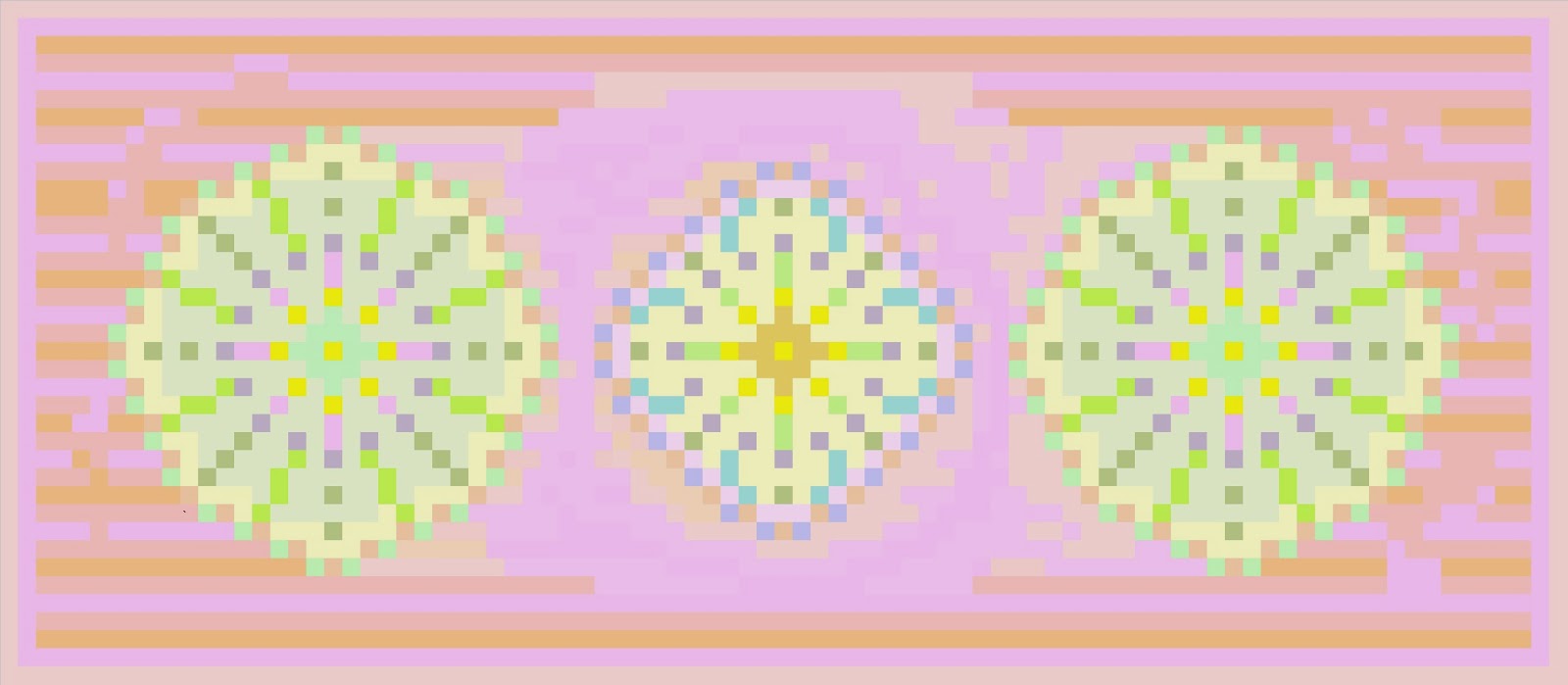
An angel at my picnic
The ruler function: 2^a(n) divides 2n. Or, a(n) = 2-adic valuation of 2n. ( OEIS A001511 )
1, 2, 1, 3, 1, 2, 1, 4, 1, 2, 1, 3, 1, 2, 1, 5, 1, 2, 1, 3, 1, 2, 1, 4, 1, 2, 1, 3, 1, 2, 1, 6, 1, 2, 1, 3, 1, 2, 1, 4, 1, 2, 1, 3, 1, 2, 1, 5, 1, 2, 1, 3, ...
Quarter-squares: floor(n/2)*ceiling(n/2). Equivalently, floor(n^2/4). ( OEIS A002620 )
0, 0, 1, 2, 4, 6, 9, 12, 16, 20, 25, 30, 36, 42, 49, 56, 64, 72, 81, 90, 100, 110, 121, 132, 144, 156, 169, 182, 196, 210, 225, 240, 256, ...
Some examples :
for n=2, 3, 4, 5, 6, 7, 8, 9, 10 have 1*1, 1*2, 2*2, 2*3, 3*3, 3*4, 4*4, 4*5 and 5*5
1, 2, 1, 3, 1, 2, 1, 4, 1, 2, 1, 3, 1, 2, 1, 5, 1, 2, 1, 3, 1, 2, 1, 4, 1, 2, 1, 3, 1, 2, 1, 6, 1, 2, 1, 3, 1, 2, 1, 4, 1, 2, 1, 3, 1, 2, 1, 5, 1, 2, 1, 3, ...
Quarter-squares: floor(n/2)*ceiling(n/2). Equivalently, floor(n^2/4). ( OEIS A002620 )
0, 0, 1, 2, 4, 6, 9, 12, 16, 20, 25, 30, 36, 42, 49, 56, 64, 72, 81, 90, 100, 110, 121, 132, 144, 156, 169, 182, 196, 210, 225, 240, 256, ...
Some examples :
for n=2, 3, 4, 5, 6, 7, 8, 9, 10 have 1*1, 1*2, 2*2, 2*3, 3*3, 3*4, 4*4, 4*5 and 5*5
Thursday, 21 August 2014
Friday, 15 August 2014
Thursday, 14 August 2014
Tuesday, 12 August 2014
Friday, 8 August 2014
Wednesday, 6 August 2014
Saturday, 2 August 2014
Thursday, 31 July 2014
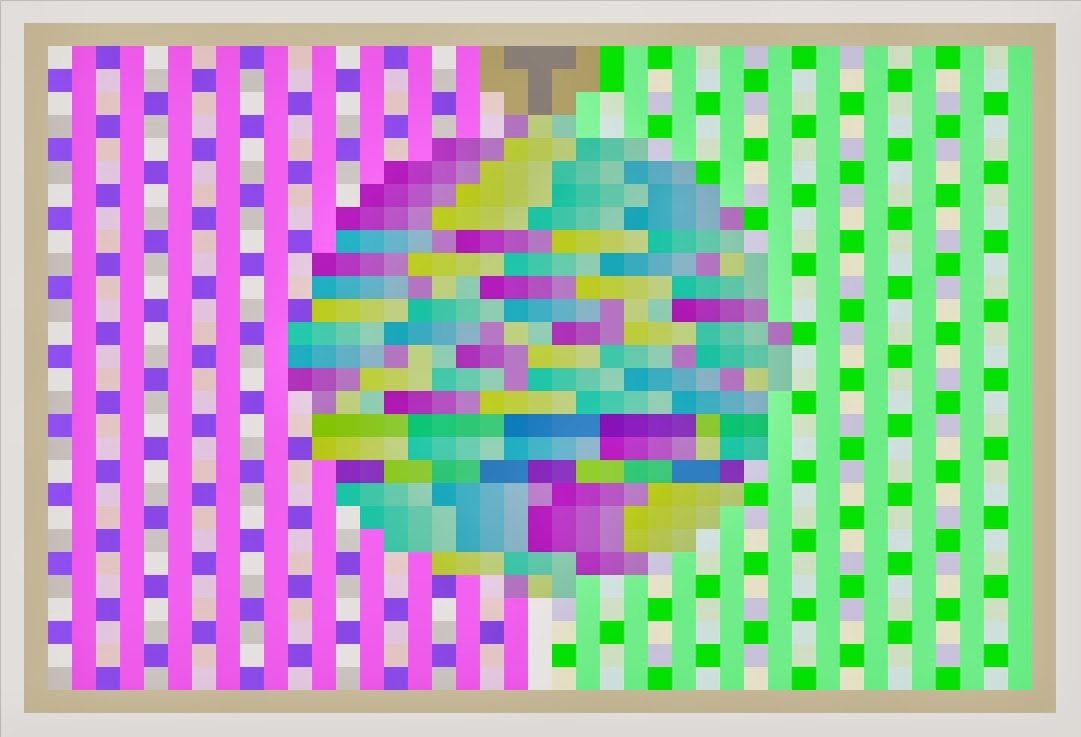
the weaver bird
Weaver birds, also known as weaver finches, get their name because of their elaborately woven nests
(the most elaborate of any birds'), though some are notable for their selective parasitic nesting habits. The nests vary in size, shape, material used, and construction techniques from species to species.
(Source: Wikipedia)
Yay, for all the wonderful bird life in nature !
(the most elaborate of any birds'), though some are notable for their selective parasitic nesting habits. The nests vary in size, shape, material used, and construction techniques from species to species.
(Source: Wikipedia)
Yay, for all the wonderful bird life in nature !
Wednesday, 30 July 2014
Saturday, 26 July 2014
Wednesday, 23 July 2014
Monday, 21 July 2014
transport Egyptian fractions { keep on truckin' }
5/12 = 1/4 + 1/10 + 1/15 = 1/5 + 1/6 + 1/20
Lcm( 12, 4, 10, 15, 5, 6, 20 ) = 6025/60 = 15/60 + 6/60 + 4/60 = 12/60 + 10/60 + 3/60
60 is the smallest number with 6 representations as a sum of 2 primes:
60 = 7+53 = 13+47 = 17+43 = 19+41 = 23+37 = 29+31
Sunday, 20 July 2014
Friday, 18 July 2014
Thursday, 17 July 2014
The dynamics of positive integers with regards to happy numbers
A happy number example
A number such as 334 is three hundred and thirty four with digits forming the multiset { 3, 3, 4 }
We then sum the squares of these digits: 3^2 + 3^2 + 4^2 = 9 + 9 + 16 = 34
Now we do the same for 34: 3^2 + 4^2 = 9 + 16 = 25
And iterating this process:
2^2 + 5^2 = 4 + 25 = 29
2^2 + 9^2 = 4 + 81 = 85
8^2 + 5^2 = 64 + 25 = 89
8^2 + 9^2 = 64 + 81 = 145
1^2 + 4^2 + 5^2 = 1 + 16 + 25 = 42
4^2 + 2^2 = 16 + 4 = 20
2^2 + 0^2 = 4 + 0 = 4
If we keep going there is a cycle:
4^2 = 16 ; 1^2 + 6^2 = 37 ; 3^2 + 7^2 = 58 ; 5^2 + 8^2 = 89 ; and then 145, 42, 20, 4, as before.
If the number enters into the cycle 4, 16, 37, 58, 89, 145, 42, 20, 4 the number is called “happy”.
The only other cycle is 1, 1, 1, 1, …
An interesting question is: how do happy numbers “enter into” the cycle ?
For example, with 334, the number enters into the cycle at 89.
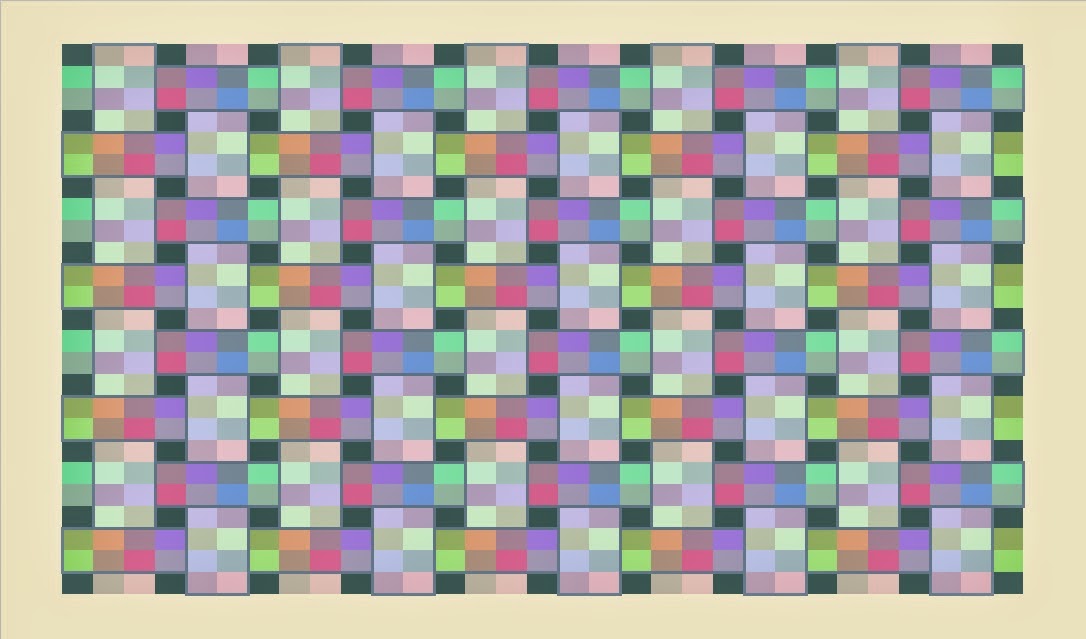
This visualisation shows the dynamics of this process for numbers 1 up to 40 using distinctive colours for the digit values 0, 1, 2, …, 9 and box borders to show where the number enters into a cycle.
We then sum the squares of these digits: 3^2 + 3^2 + 4^2 = 9 + 9 + 16 = 34
Now we do the same for 34: 3^2 + 4^2 = 9 + 16 = 25
And iterating this process:
2^2 + 5^2 = 4 + 25 = 29
2^2 + 9^2 = 4 + 81 = 85
8^2 + 5^2 = 64 + 25 = 89
8^2 + 9^2 = 64 + 81 = 145
1^2 + 4^2 + 5^2 = 1 + 16 + 25 = 42
4^2 + 2^2 = 16 + 4 = 20
2^2 + 0^2 = 4 + 0 = 4
If we keep going there is a cycle:
4^2 = 16 ; 1^2 + 6^2 = 37 ; 3^2 + 7^2 = 58 ; 5^2 + 8^2 = 89 ; and then 145, 42, 20, 4, as before.
If the number enters into the cycle 4, 16, 37, 58, 89, 145, 42, 20, 4 the number is called “happy”.
The only other cycle is 1, 1, 1, 1, …
An interesting question is: how do happy numbers “enter into” the cycle ?
For example, with 334, the number enters into the cycle at 89.
This visualisation shows the dynamics of this process for numbers 1 up to 40 using distinctive colours for the digit values 0, 1, 2, …, 9 and box borders to show where the number enters into a cycle.
what's something unusual about the numbers 45 and 2025 ?
number 45 is special ~ a Kaprekar number !
The first few are 1, 9, 45, 55, 99, 297, 703, ... (Sloane's A006886).
45^2 = 2025 and 20 + 25 = 45
2025 = ( 20 + 25 ) * 45
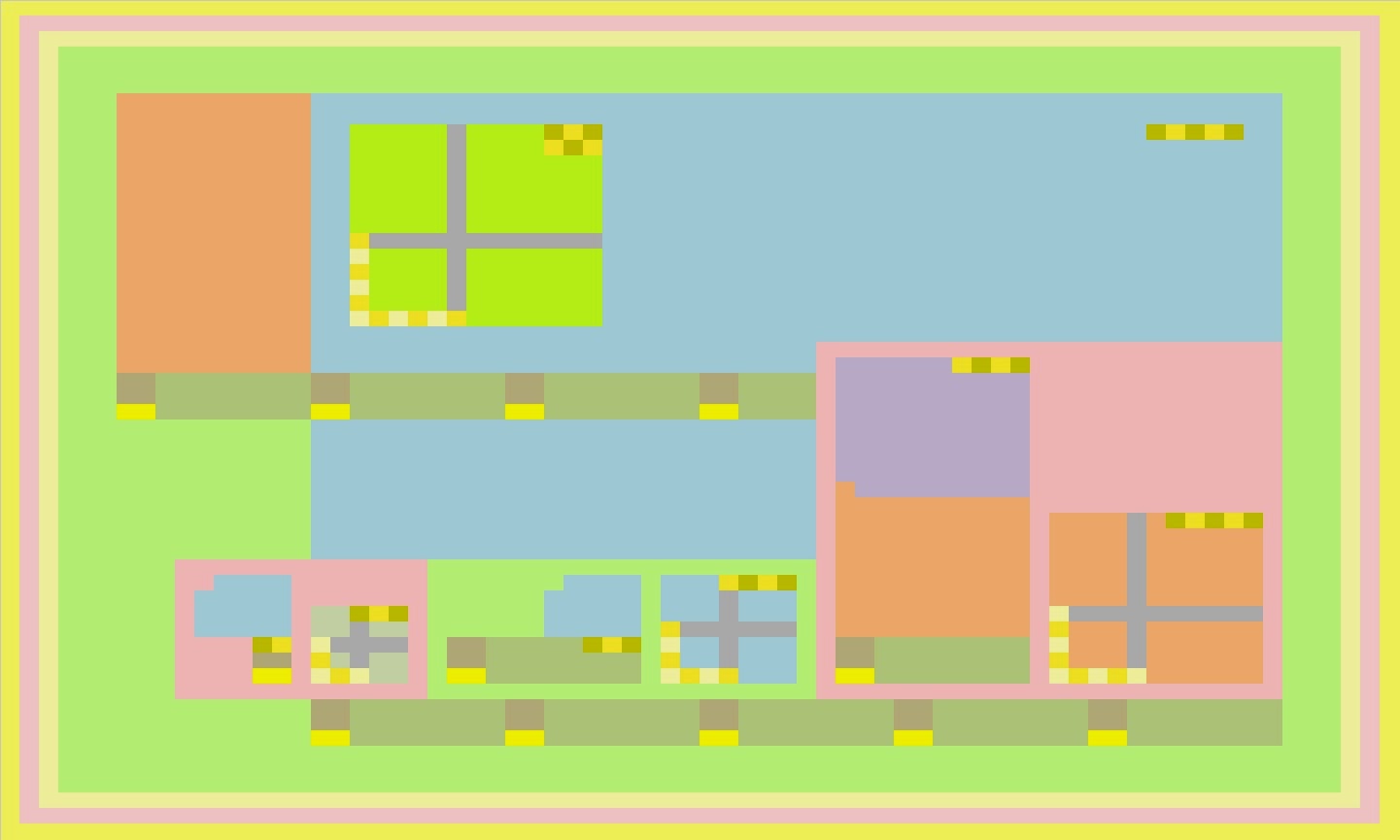
the visualisation below shows the 2025 small unit squares
in two different ways
as a 5*9 arrangement of components
each having 9*5 unit square dimensions
or a 9*5 arrangement of components
each having 5*9 unit square dimensions
odd~one~out
Wednesday, 16 July 2014
Sunday, 13 July 2014
Saturday, 12 July 2014
Tuesday, 8 July 2014
Saturday, 5 July 2014
Subscribe to:
Posts (Atom)